Guide · the line
Pen plotter or print: what's the difference for a poster?
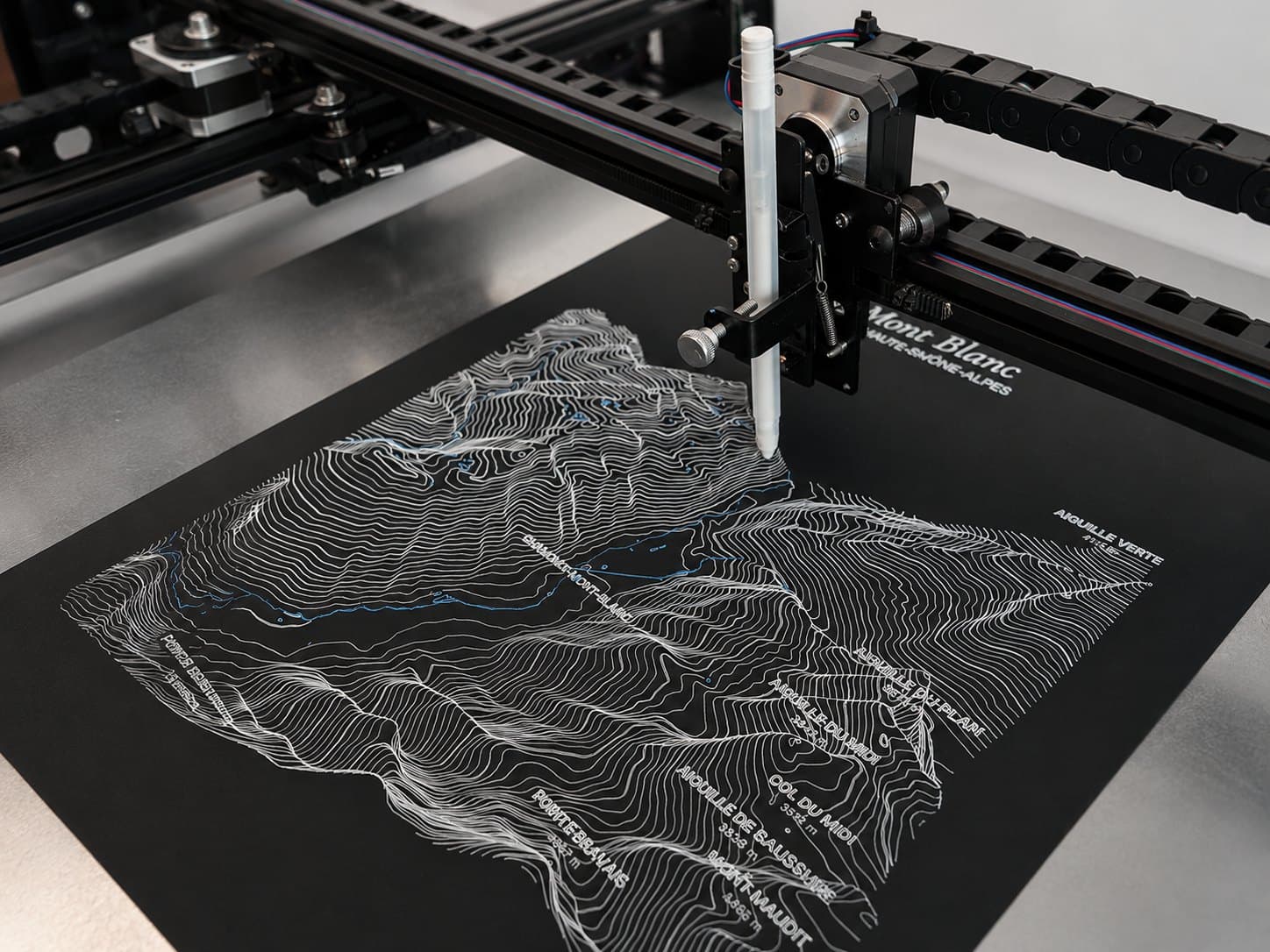
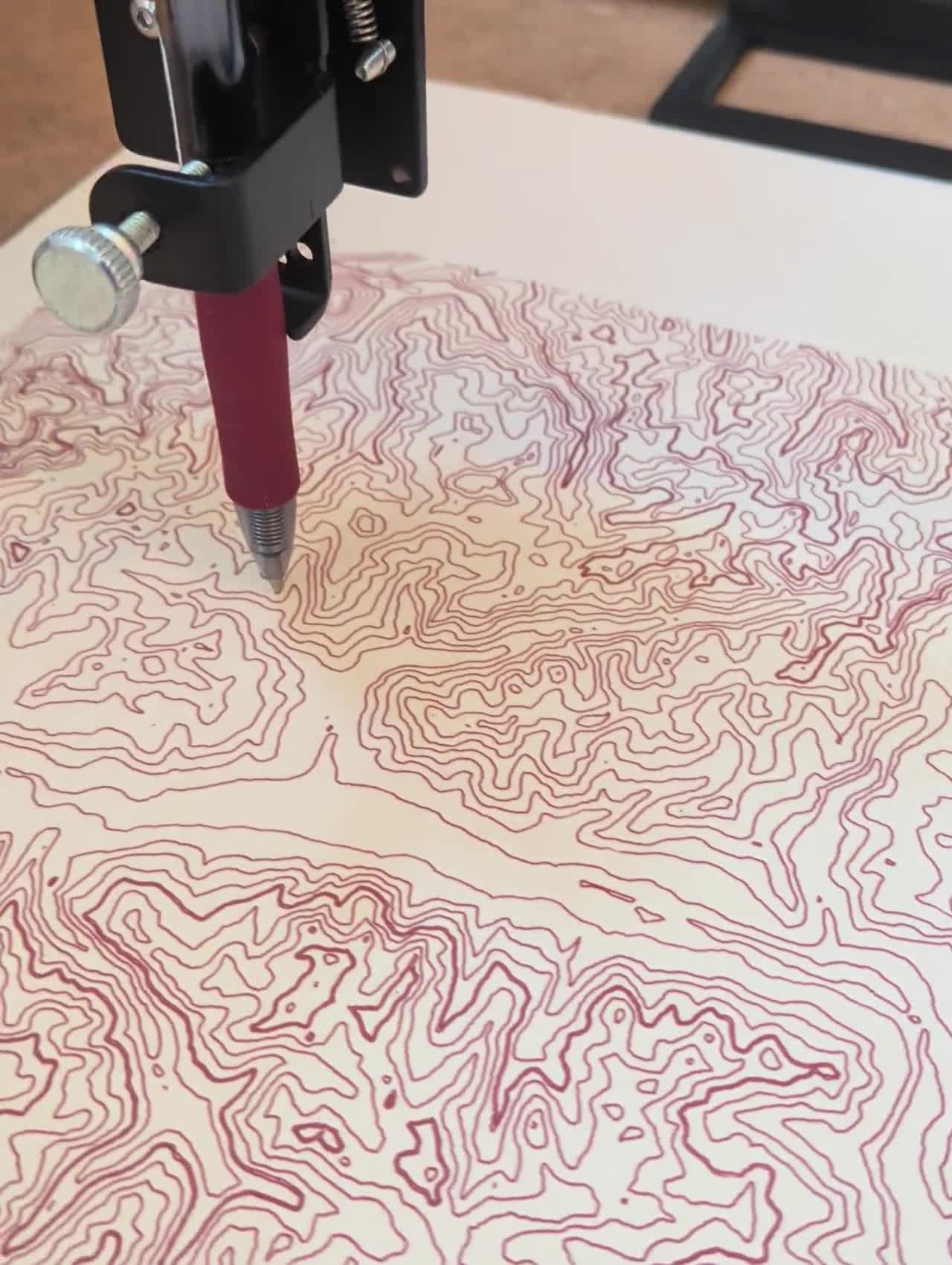
A printer sprays ink as tiny dots across the whole sheet. A pen plotter holds a real pen and draws each line, one after another. You can see the difference in the line, feel it in the slight relief of the ink, and every piece is one of a kind.
What is a pen plotter?
A pen plotter is a machine that moves a pen across a sheet of paper, side to side and up and down, lowering it to draw and lifting it to move on. Lines are all it can make. Where a printer builds an image from a grid of very fine dots, a plotter draws continuous strokes, much like a pen on paper.
The machine comes from engineering offices. The Calcomp 565 of 1959 already ran the paper over a roller under the pen. Through the 1960s, plotters grew alongside computer-aided design, then printers replaced them from the 1980s on. The Plotrek workshop uses one for what it does better than any printer: a real line, in ink, on artist paper.
How is a race poster plotted?
To a plotter, a race poster is thousands of lines: the contour lines of the terrain, the streets, the water, the course itself, then the text of the title block, also drawn stroke by stroke. The machine works through them layer by layer, one ink after another.
The pen is on the paper for about 19 minutes for A4, 27 for A3 and 48 for A2. Those times vary with the race: a big-city marathon, with its tight street grid, takes more lines than a mountain trail.
Before and after the plot, there is the workshop's own work. Every pen change means recalibrating, and if something goes wrong, the sheet is started again. Preparation, plotting and checking included, one poster takes three hours at most.
What difference does it make to the eye and to the touch?
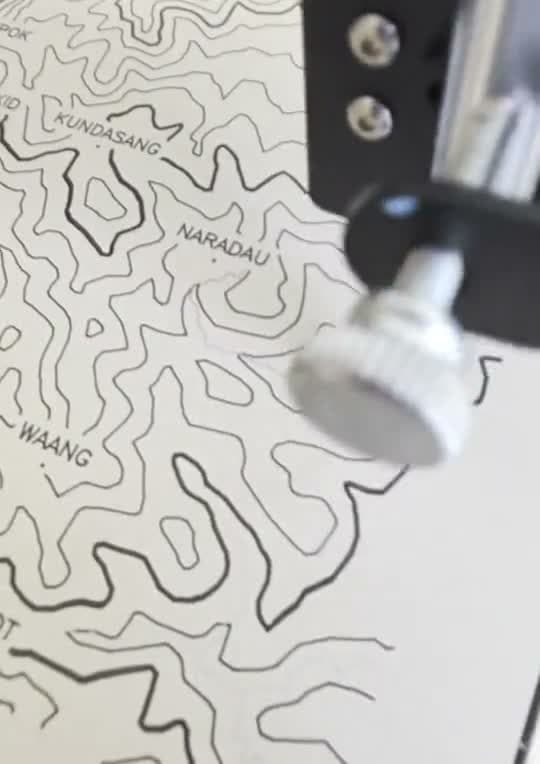
A pen line has a crisp edge and an even width. Where two lines cross, the ink builds up and darkens slightly. On textured paper, the tip follows the grain. In low, raking light you can see the slight relief of ink settled into the fibres.
A print shows none of this. Up close, the image is made of dots and the surface stays uniform. It is the first thing you notice when you hold the two side by side.
Which inks and papers does the workshop use?
The inks are pigment-based, chosen for a precise line and their resistance to light. The tip depends on the ink: 0.5 mm for black, 0.7 mm for the other inks, such as white, gold and blue. On dark papers, white and gold are opaque inks that cover the background.
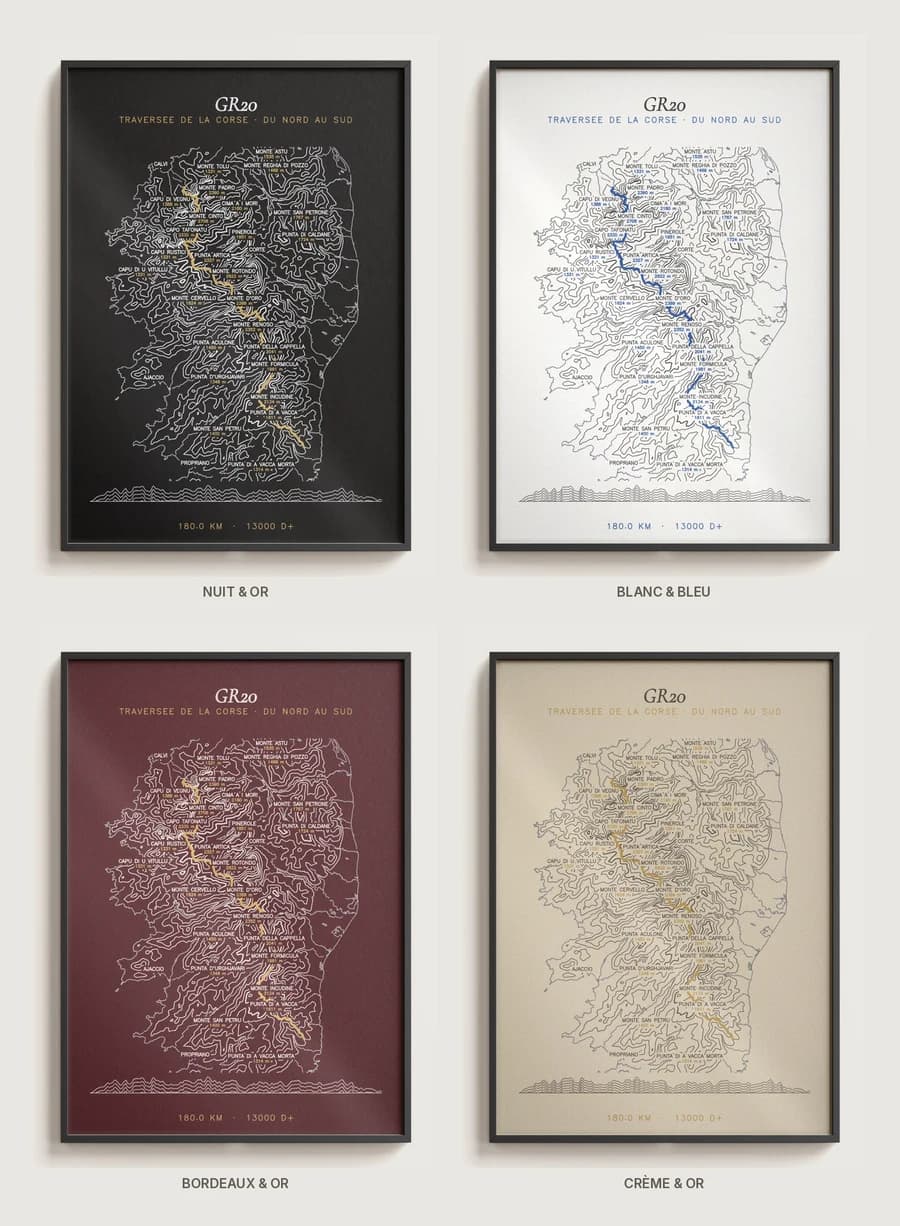
The papers are mass-coloured fine-art papers, from 160 to 250 gsm depending on the colour. On a night or burgundy poster, the background colour is the paper itself, not a layer of ink. There are four colourways: night and gold, burgundy and gold, cream and gold, white and blue.
Pen plotter vs print: the comparison, point by point
| Criterion | Pen plotter (Plotrek) | |
|---|---|---|
| Line | Continuous line drawn by a 0.5 mm or 0.7 mm tip; crisp edge, slight ink relief | Grid of very fine dots; uniform surface |
| Ink | Pigment-based pen ink, laid down in one pass; opaque inks on dark paper | Inkjet or toner; dye-based or pigment-based depending on the machine |
| Paper | Mass-coloured fine-art paper, 160 to 250 gsm; the background is the paper's own colour | Photo, matte or fine-art paper depending on the service; a dark background is usually printed in ink |
| Longevity | Pigment inks chosen for their resistance to light and UV | Good with pigment inks; dye-based inks fade quickly in light |
| Lead time | 19 to 48 min under the pen depending on size, 3 h at most with preparation and checking; 5 to 10 business days to make, 5 to 7 business days in transit | Fast to print; lead time depends on the service |
| Price | €59 (A4), €89 (A3), €149 (A2), free shipping | Depends on the printer, paper and size |
| Uniqueness | Each piece is plotted on its own; your name and time make it one of a kind | Identical, repeatable prints |
Why does a pen-plotted poster cost more?
A print comes off the machine in one go. A plotted poster keeps the machine busy for 19 to 48 minutes depending on size, plus a person to prepare it, change the pens and check it: three hours at most per piece. The price follows that time and the materials: €59 in A4, €89 in A3 and €149 in A2, with free shipping.
How long does it take to arrive?
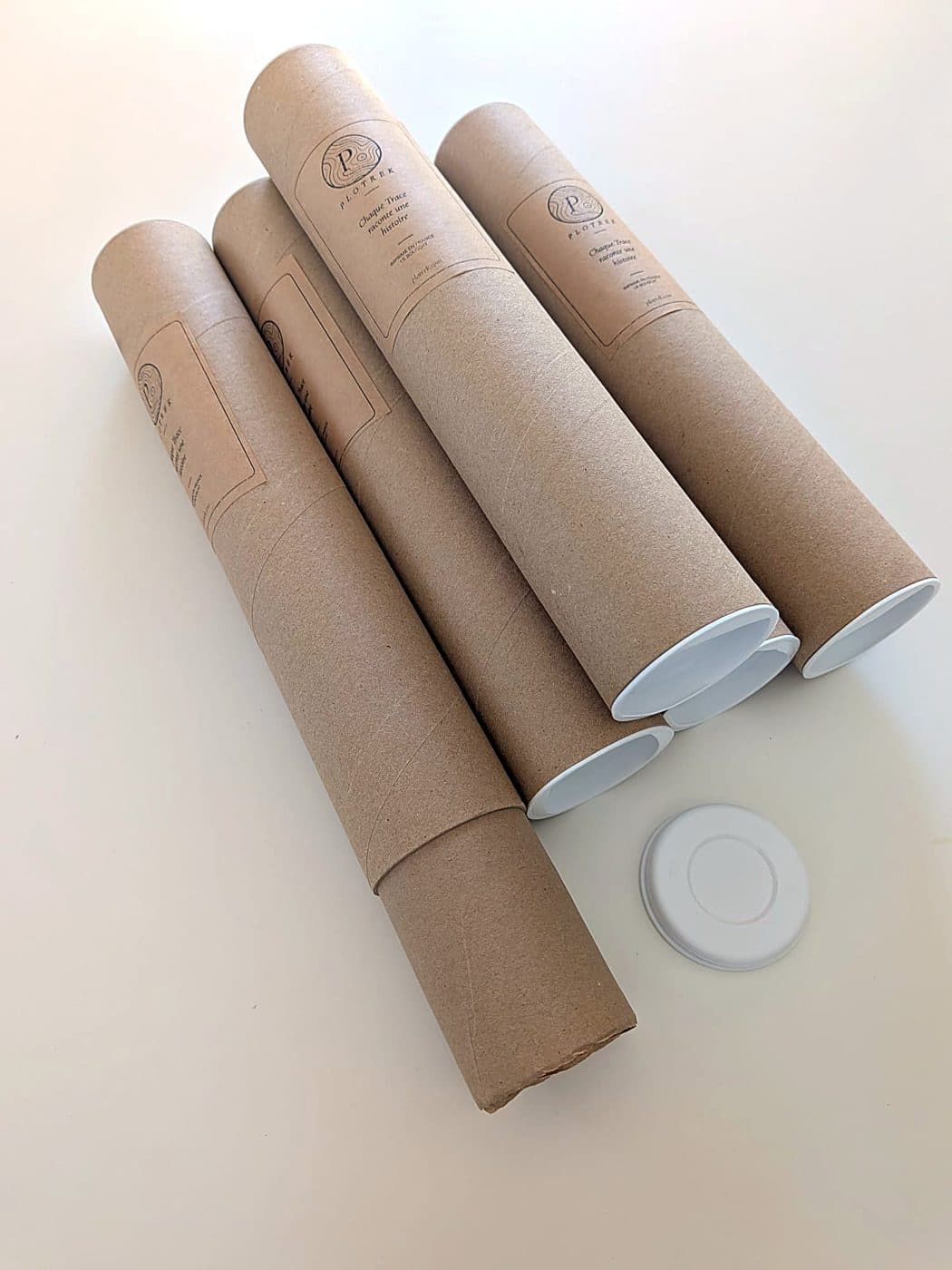
Allow 5 to 10 business days for the workshop to make it, then 5 to 7 business days in transit: 10 to 17 business days in all. The poster ships rolled in a tube, protected for the journey.
Does a pen-plotted poster last?
Longevity depends mostly on the ink. Dye-based inks fade quickly in light; pigment-based inks stand up to UV far better. The workshop plots with pigment inks on fine-art paper. Like any work on paper, the poster is best kept out of direct sunlight.
When should you choose print, and when the pen?
Both have their place. For several identical copies, a tight budget or a very short deadline, print is the right answer. To keep a record of one particular race, with your name and time in the title block, the pen gives you what a print cannot: a piece drawn for you, line by line. That is all Plotrek does: the workshop plots with a pen; it does not print.